Literary sessions explore the journey from ‘Monkey Mind’ to ‘Monk Mind’ and the economic dimension of women’s identity
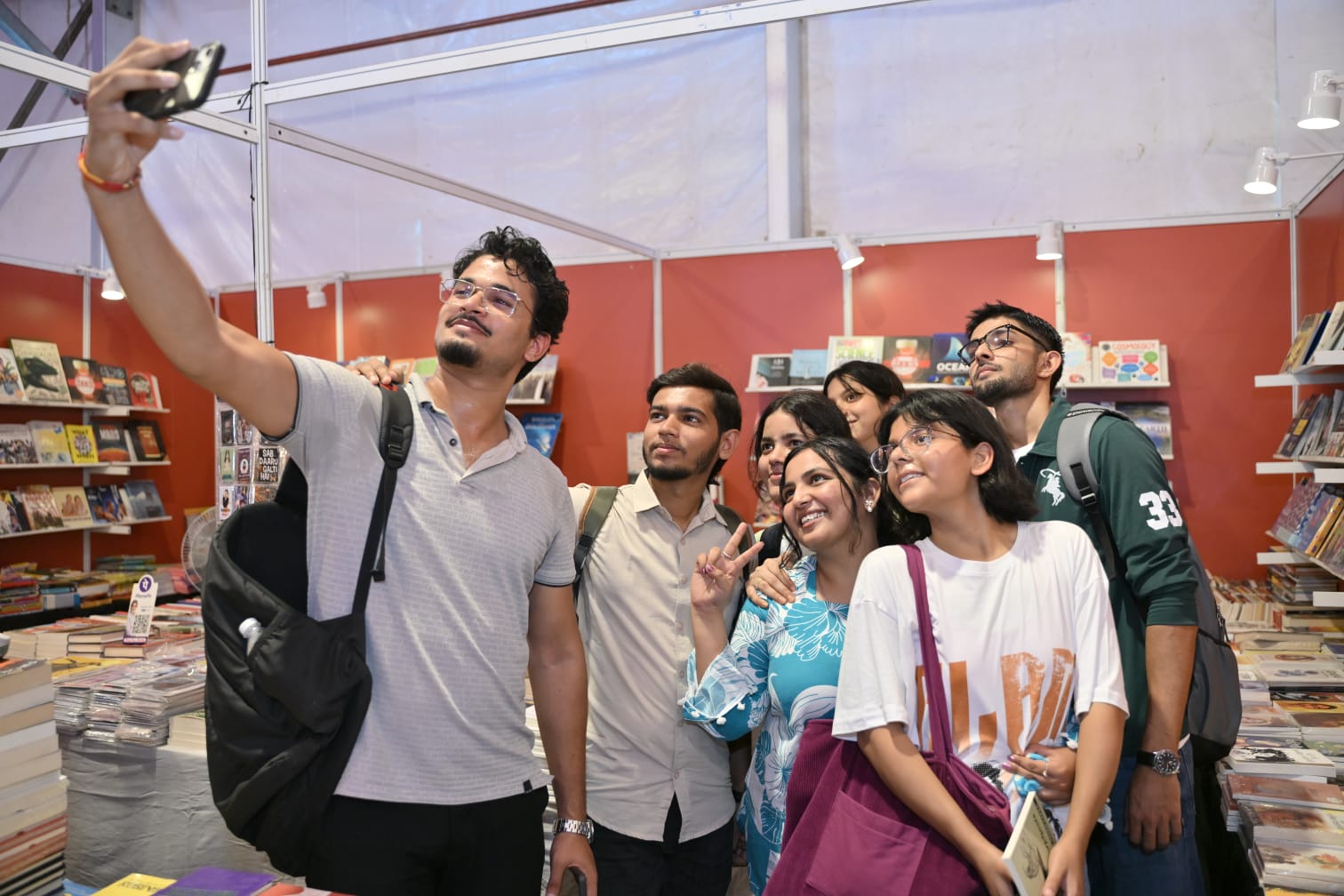
Lucknow: The third day of the fifth edition of the Gomti Book Festival (12–20 September 2026), organised by the National Book Trust, India, at the Sports Ground, University of Lucknow, featured a diverse range of programmes at the Children’s Corner centred on storytelling, mindfulness, art, creativity and digital reading. More than 1,300 students from various schools across Lucknow participated enthusiastically in the activities.

The day began with a ‘Kamishibai Storytelling Session’, where storyteller Ranjita Sachdeva introduced children to Japan’s unique ‘paper theatre’ storytelling tradition. This was followed by a ‘Mindfulness for Curious Minds’ session led by storyteller and communication coach Priyanka Sagar, who encouraged children to remain aware of the present moment and understand their emotions and sources of happiness.
At the ‘Waste to Wonder Workshop’, children created attractive artworks using waste materials under the guidance of artist Sugriva Vishwakarma. An orientation session on the Rashtriya e-Pustakalay introduced students to the digital initiative offering more than 7,000 e-books in 23 languages.
From ‘Monkey Mind’ to ‘Monk Mind’: A Message of Self-Reflection and Discipline
The literary sessions at the festival featured a special discussion on the book ‘Living Like A Monk: A Journey to Solve the Mind’. Young author Arnav Shukla interacted with the audience and shared his thoughts on mental peace, self-discipline and the practical aspects of spirituality. The session was moderated by Dr Neha Jain, Assistant Professor, Department of Sociology, Pt. Deendayal Upadhyaya Government Girls’ Postgraduate College, Rajajipuram.
Arnav Shukla said that the mind today remains constantly surrounded by information, thoughts and worries. In such a situation, self-reflection, discipline and awareness can help transform the ‘Monkey Mind’ towards a ‘Monk Mind’. He also spoke about the importance of journaling, meditation, mantras, positive affirmations, visualisation and good company. He emphasised that being a ‘Monk’ is not a destination but a lifelong journey.
The second literary session of the day featured a discussion on ‘The Economic Dimension of Identity’. Author and writer on women’s financial literacy, Aarti Gupta, shared her views on women’s economic independence, investment, savings, wealth creation and their participation in financial decision-making. The session was moderated by Dr Umeshchandra Sirsawari.

The discussion emphasised that women’s economic empowerment is not limited to earning an income. It also includes the ability to make independent financial decisions, understand savings and investments, and build assets in their own name. The session also explored social perceptions surrounding women’s financial independence, the relationship between marriage and financial security, and the role of men in ensuring that women become equal partners in financial decision-making within the family.
Drawing from the ideas presented in Aarti Gupta’s book ‘I Am My Own Laxmi’, the session encouraged women to become more aware of their economic identity and future financial security.
As part of the programme, Dr Lalit Kishore Mandora, Hindi Editor, National Book Trust, India, honoured the invited guests by presenting them with books and shawls, in keeping with the tradition of the Trust.
Birju Maharaj Kathak Sansthan’s Cultural Evening Captivates the Audience
As part of the cultural programme at the festival, a special ‘Cultural Evening’ was presented by Birju Maharaj Kathak Sansthan, Lucknow. Artists and students captivated the audience with enchanting performances of classical music, light music and Kathak.
The programme began with an invocation to Lord Ganesha. This was followed by performances based on seasonal ragas, devotion, Braj culture and ghazal as part of the classical music segment. The beauty of the monsoon season was brought alive through ‘Bijuri Chamke’ in Raag Miyan Malhar.
This was followed by the second Kathak presentation, featuring the composition ‘Barasan Lagi Re Badariya’ in Teentaal and Raag Miyan Malhar. The performers beautifully showcased various aspects of Teentaal in drut laya through Kathak’s intricate rhythmic patterns and expressive dance vocabulary.












 https://www.youtube.com/watch?si=RtToJsBhYBatUrym&v=mOuYNSdhjHA&feature=youtu.be